Table & lantern
Every recipe here
survived the end of a world.
That's the fiction, and the kitchens take it seriously: food in Traverse Town is what refugees would actually cook — the dishes you'd remake from memory, in a borrowed kitchen, because your kid can't sleep without them. It is, consequently, the best food in any park anywhere.
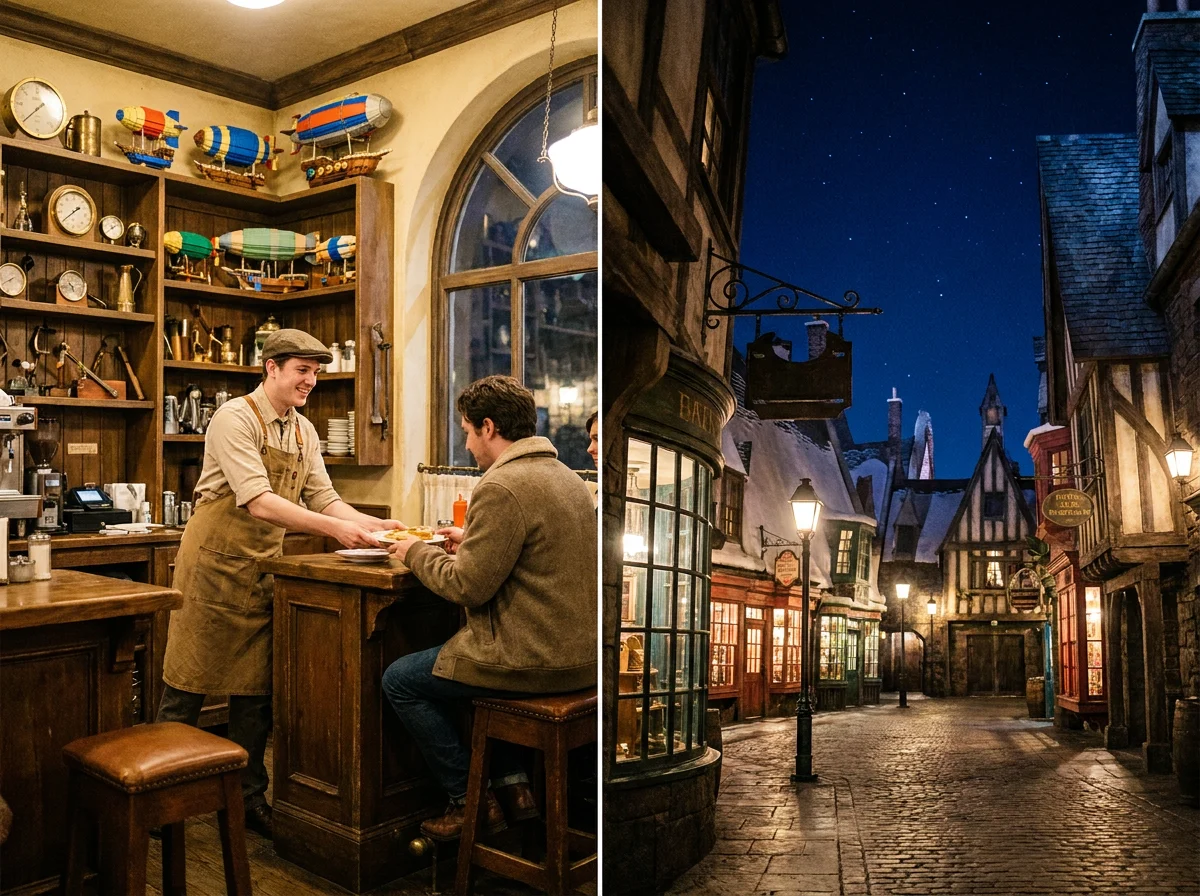
First District · Counter diner
The Accessory Shop
Technically a repair shop with a griddle problem. Cid — every Cid; the role has been played by nine performers and one actual retired aircraft mechanic — runs a fourteen-stool counter where the food is what a pilot would want at one in the morning: griddled sandwiches, bottomless coffee, a stew of the day he describes only as "the stew."
While you eat, he'll fix whatever's broken. A stroller wheel, a bag strap, a pair of glasses. There's a tariff card on the wall: repairs, free; sympathy, free; advice, whether you want it or not.
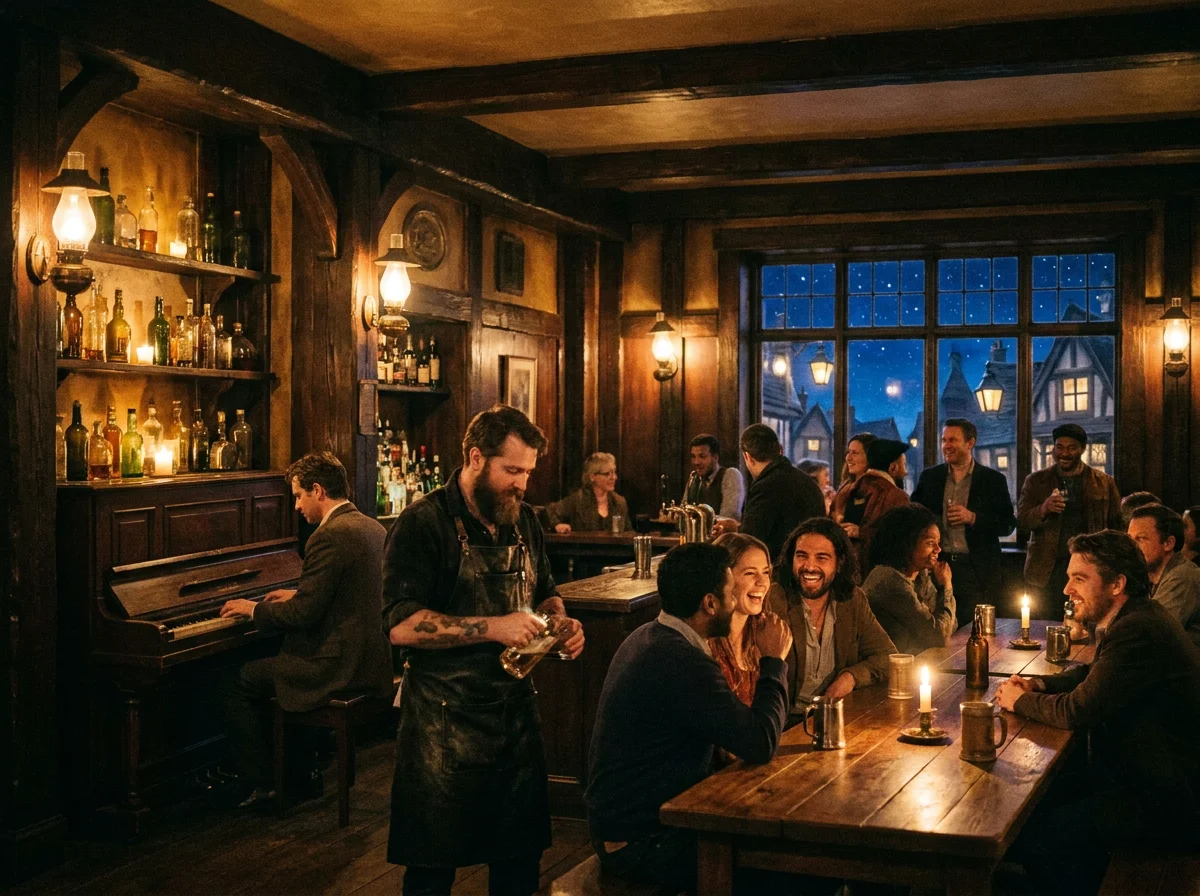
Third District · The bar
Seventh Heaven
The corner bar every neighborhood deserves and no neighborhood gets. Dark wood, a piano that starts at nine, a dartboard with a decade of grudges in it, and a bartender — strong, kind, terrifyingly good at remembering faces — who runs the room like a lighthouse runs a coastline. Families welcome until eleven; the kids' "cocktails" arrive with the same ceremony as anyone's.
One long communal table, on purpose. You will end up in a conversation. The town regrets nothing.
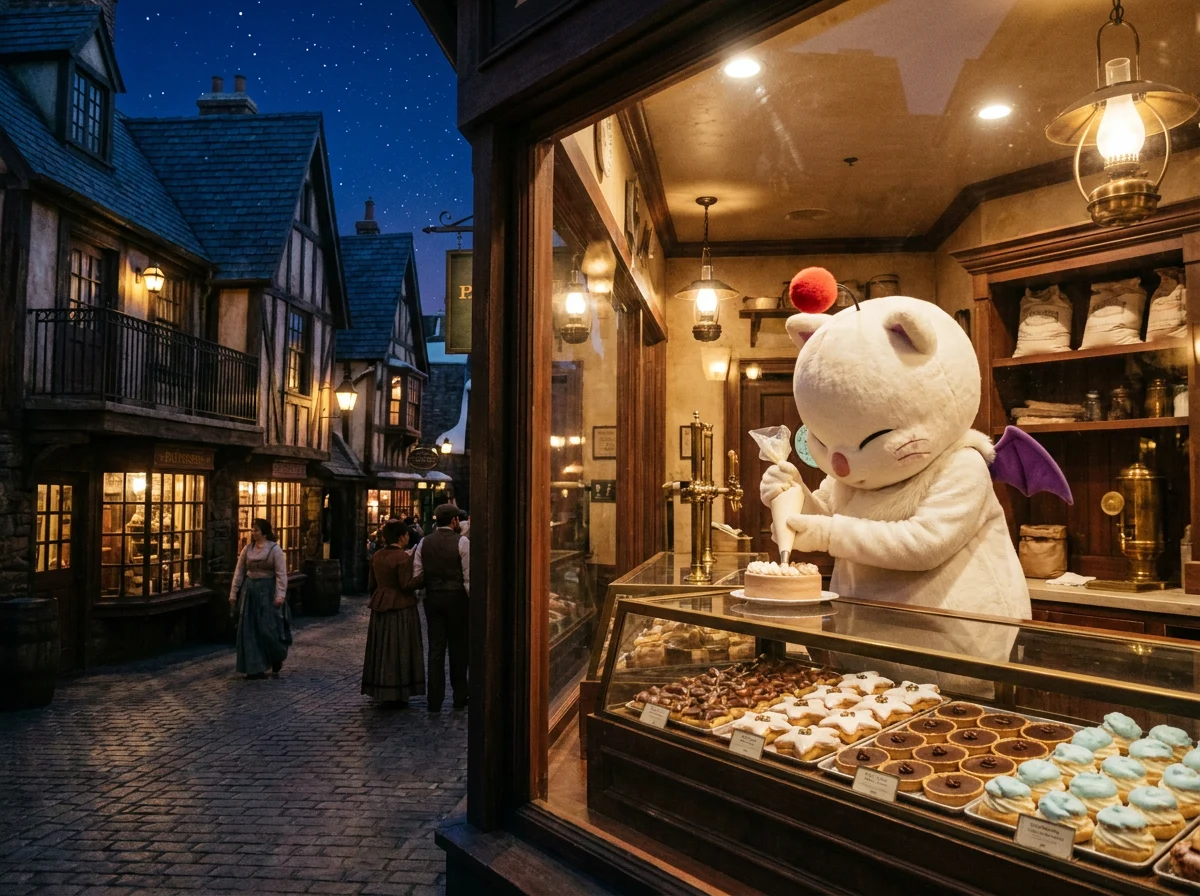
First District · Patisserie
The Synthesis Kitchen
The moogles' second workshop, where the raw materials are butter and audacity. The conceit: desserts here are synthesized, not baked. Around town you'll be handed ingredient stamps — for riding the Waterway, for losing at Flick Rush with dignity, for asking a gardener what that flower is — and at the Kitchen, your stamp card becomes a commission: the moogle at the pass reads it, mutters kupo at the difficult parts, and builds you a dessert that has never existed before and never will again.
No stamps? The case is full of standing repertoire: star-glazed shortbread, galaxy tarts, cream puffs the color of the four a.m. sky.
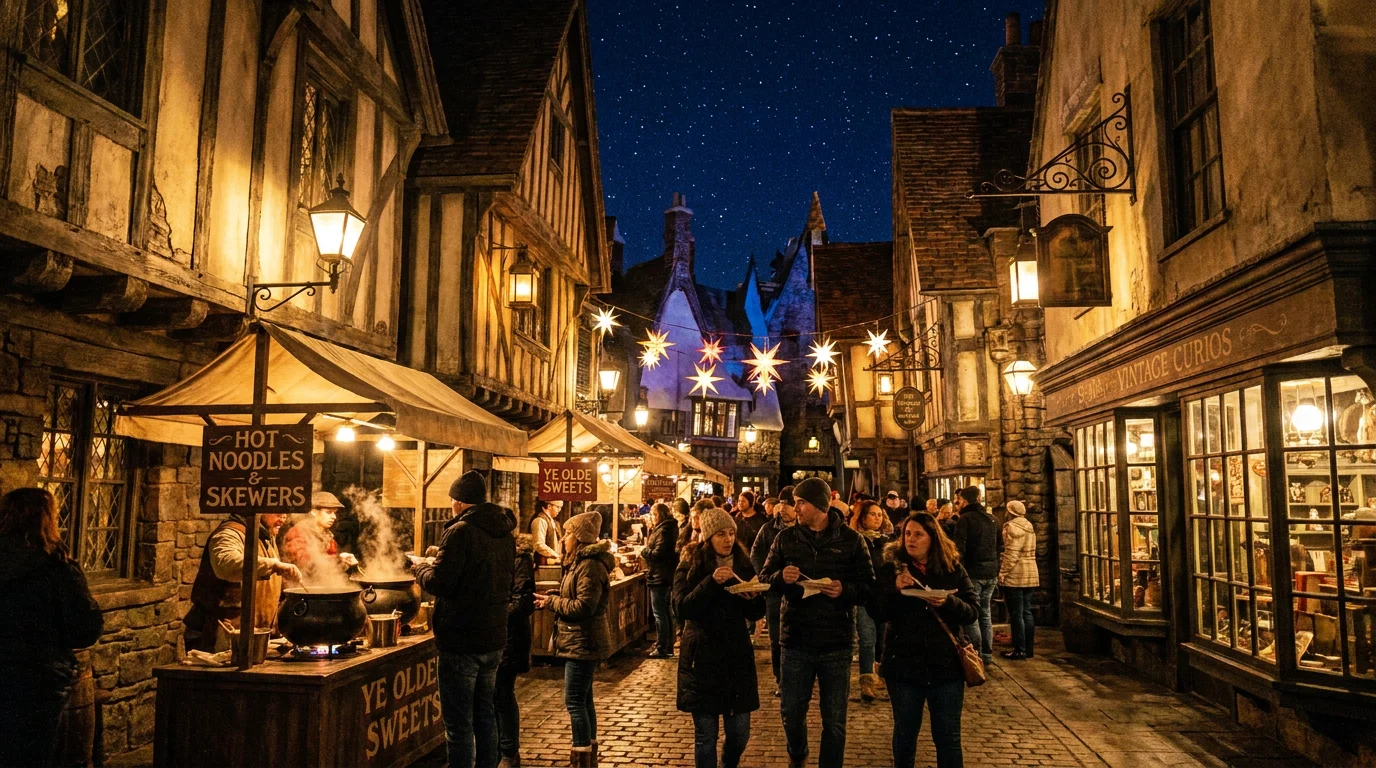
Third District · Eleven stalls
The Night Market
The heart of the town's food, and of its fiction. Each stall serves one world that no longer exists, cooked by someone who — in the story — carried the recipe out in their head. The menus are short because memory is short: a stall serves the two dishes its keeper "saved," and nothing else, ever.
Read the small hand-lettered card pinned to each stall. It says who the recipe belonged to. The cards are fiction. The lump in your throat is not. Eat something from a world you'll never see; that's what the market is for.
Wayfinder secret: say "I'll carry it" to any stallkeeper and they'll teach you the recipe on a card to take home. The town believes recipes shouldn't have single points of failure.
Second District · The clock stand
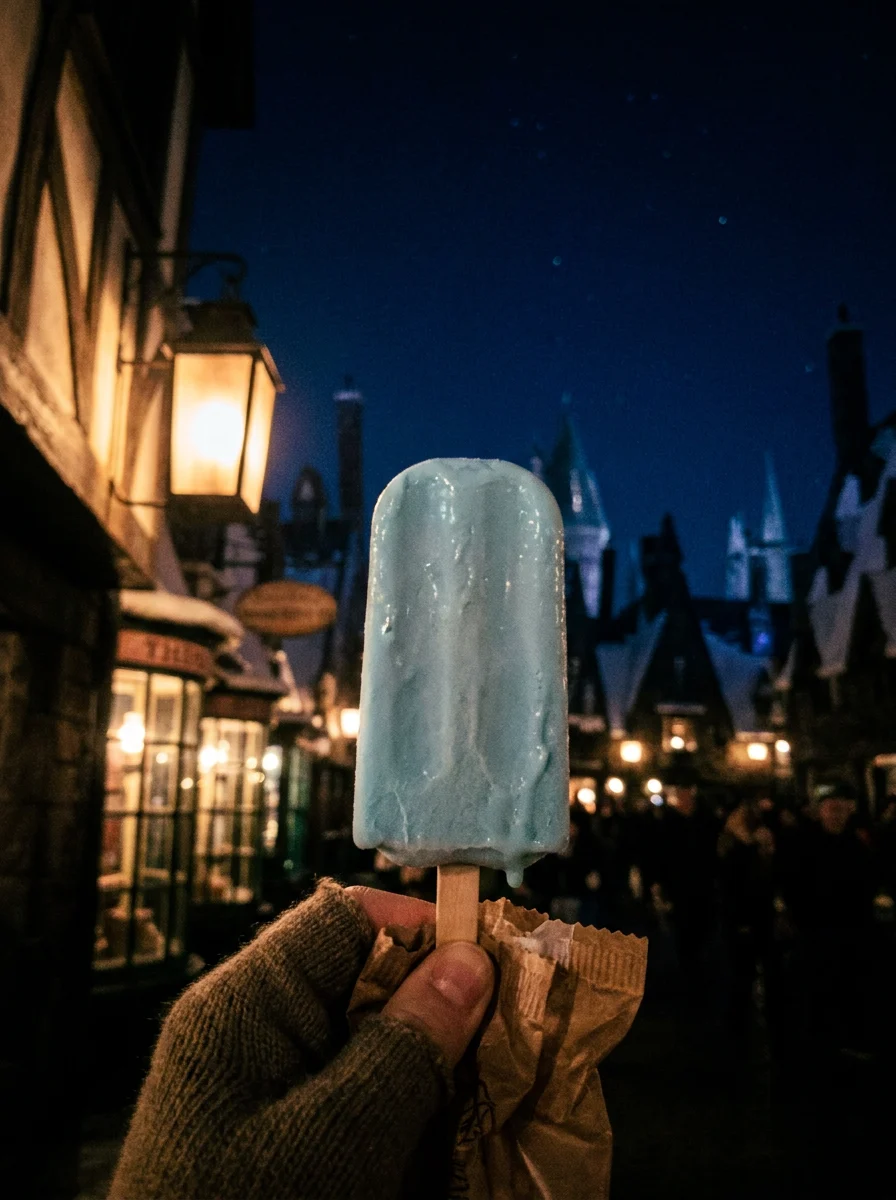
Sea-Salt, at the Rail
One flavor. One stand, at the rooftop rail where the tiles meet the sky. The bar is the exact blue of the hour the town opens, and it tastes salty first and sweet after, which the town maintains is the correct order for everything — days, years, evenings, lives.
Tradition insists it's eaten sitting on the rail ledge (there is a net; the town is sentimental, not careless), feet dangling over the Second District, with someone you'd share your last one with. WINNER sticks are real and redeemable. What they're redeemable for is the town's best-kept secret, and everyone who knows has kept it, which should tell you something about this place.
The rest of the table
Four more, briefly.
The Green Room is the closest the town comes to formal, which is not very; jackets are neither required nor noticed. The Red Room is for the hour when the market has gone quiet and you aren't done with the night — knock, and the door is opened by someone who acts delighted it's you, because they are paid to be and also, somehow, are.
As for the paopu: the stand sells the star-shaped fruit only in halves, two spoons, one price. Share it with someone and — the story goes — your destinies intertwine. The town takes no legal responsibility for this. The stand has, however, hosted eleven proposals this year, and it's July.
“Salty first, sweet after. The correct order for everything.” — painted on the sea-salt stand